Cloud Infrastructure Management Services for Environments Already Running in Production
Mirketa's cloud infrastructure management services take over once workloads are already live in AWS, Azure, or Google Cloud, bringing every resource under version-controlled infrastructure as code, running Kubernetes clusters against real capacity data, closing the gap between cloud spend and actual usage, and enforcing configuration consistency across every environment so nothing drifts quietly out of compliance.
- Full IaC Coverage, Not Partial
- Kubernetes Capacity Planned, Not Guessed
- FinOps-Driven Cost Governance
- Drift Detected Before It Ships
Infrastructure Operations Console
LIVE- In Sync
Terraform state: production VPC
- Healthy
EKS node pool autoscaling
- Reviewing
Staging vs. prod config parity
Trusted by Platform & Infrastructure Engineering Teams


Business Challenges
Why Infrastructure That's Already Live Gets Harder to Manage, Not Easier
Once workloads are running in the cloud, the discipline that got them there tends to erode. These are the four patterns Mirketa sees most often in environments that have been live for a year or more.
Hand-Made Changes Outside Version Control
An engineer fixes something directly in the console during an incident, it works, and it never gets backported into Terraform, so the state file quietly stops matching reality.
Kubernetes Clusters Sized on Guesswork
Node pools were sized for launch-day traffic and never revisited, so clusters either run over-provisioned around the clock or scramble during real load spikes.
Cloud Spend Outpacing Usage With No Owner
Nobody on the team owns cost as a metric, so reserved instance coverage lapses, orphaned volumes pile up, and the monthly bill grows faster than the workload it's running.
"Works in Staging, Breaks in Production"
Environments were cloned once and have diverged ever since, so a change that passes every staging test still fails when it reaches a production config nobody fully documented.
Cloud Solution Overview
Day-2 Infrastructure Operations Built Around Code, Not Console Access
Mirketa's cloud infrastructure management engagements start by inventorying what's actually running against what your Terraform or Pulumi state says is running, and closing that gap is usually the first deliverable, not an afterthought. Once every resource is represented in code and every change flows through a reviewed pull request, infrastructure stops being something that happens to your environment and starts being something your team controls on purpose.
From there we take over the operational load of the platform layer: Kubernetes node pool sizing and autoscaling policy tuned against real utilization, Helm-based release management for the workloads running on top of the cluster, and configuration management that keeps staging, QA, and production genuinely aligned instead of just similar. Policy-as-code guardrails catch a misconfigured security group or an unencrypted bucket before it merges, not after a scan flags it in production.
Cost is treated as an engineering input, not a finance afterthought. We build a FinOps practice around your actual environment: right-sizing instances against observed CPU and memory data, shifting steady-state workloads onto reserved or spot capacity, and giving engineering leadership a live view of what each service actually costs to run, updated continuously rather than reconstructed once a quarter from a billing export.
Core Services
Six Ways Mirketa Manages Infrastructure That's Already Live
Every ongoing infrastructure management engagement is built from these six service lines, scoped to how much of your environment is already codified.
Infrastructure-as-Code Management
Terraform or Pulumi modules, remote state management, and a pull-request workflow so every infrastructure change is reviewed, tested, and auditable.
Kubernetes & Container Operations
Node pool sizing, autoscaling policy, Helm chart lifecycle, and cluster upgrades managed against real workload demand instead of a fixed baseline.
Cost Optimization & FinOps
Reserved and spot instance strategy, orphaned resource cleanup, and per-service cost attribution so engineering owns spend, not just finance.
Patch & Configuration Management
OS patching cadence, configuration baselines, and drift remediation across every environment, applied consistently instead of environment by environment.
Multi-Cloud Governance
Consistent policy-as-code, tagging standards, and access controls enforced whether the workload sits in AWS, Azure, GCP, or across more than one.
Capacity Planning & Scaling
Forecasted growth modeled against historical usage so compute, storage, and cluster capacity scale ahead of demand instead of reacting to it.
Key Features
What Ongoing Infrastructure Management Actually Includes
Every capability below is part of the standard infrastructure management engagement, not an add-on.
Terraform State Governance
Remote state, locking, and module structure designed so infrastructure changes are reviewable instead of tribal knowledge.
Policy-as-Code Enforcement
Guardrails that block a non-compliant change at the pull-request stage, before it ever reaches a live environment.
Automated Drift Detection
Scheduled reconciliation between declared infrastructure and actual cloud state, with alerts the moment they diverge.
Kubernetes Autoscaling Tuning
Horizontal and cluster autoscaler configuration tuned against real traffic patterns, not launch-day defaults.
Cost Anomaly Alerting
Spend thresholds and anomaly detection tied to specific services, so a runaway resource gets caught within hours, not at month-end.
Environment Parity Audits
Scheduled comparisons between staging, QA, and production configuration to close the gap before it causes a failed release.
Change Management Lifecycle
Change proposed
Plan reviewed
Policy checked
Applied
Drift monitored
Benefits
What Changes Once Infrastructure Is Actually Managed
These are the outcomes Mirketa's infrastructure management clients report within the first two quarters.
A Bill That Reflects Real Usage
FinOps governance and rightsizing turn a growing, unexplained cloud bill into a cost curve that tracks actual demand.
No More Surprise Console Changes
Every change goes through code review, so 'someone fixed it in the console' stops being how incidents get resolved.
Kubernetes Capacity You Can Explain
Node pool and autoscaling decisions are backed by utilization data, not a number picked at launch and never revisited.
Environments That Actually Match
Configuration management keeps staging and production close enough that a passing test means something.
Migration / Implementation Process
A Five-Stage Path to Steady-State Infrastructure Management
This is the onboarding methodology Mirketa uses to take over infrastructure operations for an environment that's already live.
Multi-Cloud Governance Map
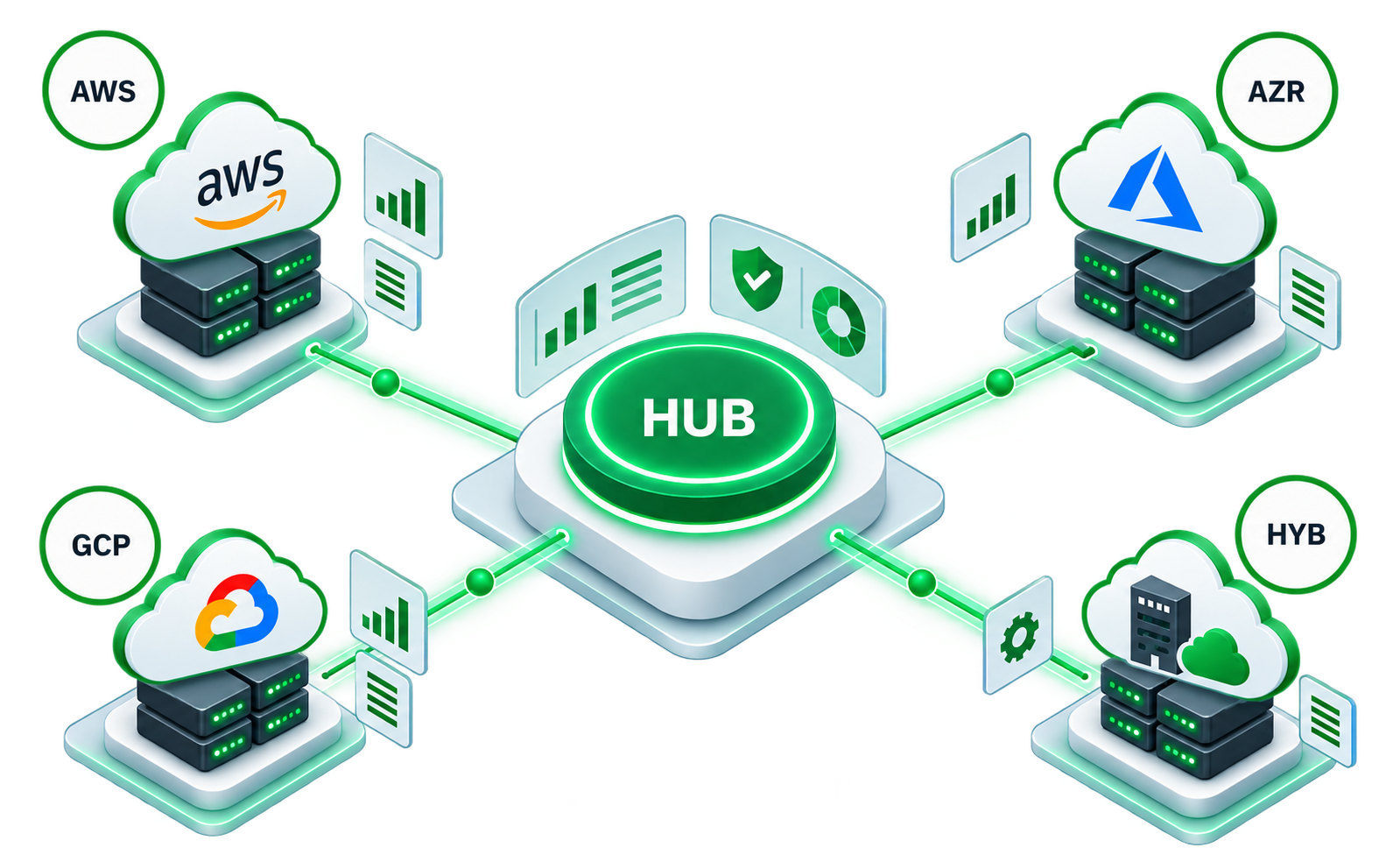
- Central Policy-as-Code Baseline
- AWS Accounts
- Azure Subscriptions
- Google Cloud Projects
- On-Prem / Hybrid Environments
Infrastructure Audit & Drift Assessment
Every resource in your live environment is inventoried and compared against existing IaC, if any, to size the actual gap.
IaC Baseline Migration
Uncodified resources are imported into Terraform or Pulumi modules until the declared state matches reality end to end.
Governance Policy Setup
Policy-as-code guardrails, tagging standards, and access controls are deployed across every account and environment.
Cost Baseline & Optimization
A cost baseline is established per service, followed by rightsizing, reserved capacity planning, and spend attribution.
Steady-State Management
Ongoing change management, patching, capacity planning, and cost governance take over as the ongoing operating model.
Technologies Supported
Infrastructure Tooling We Operate and Manage
Our platform engineers work daily across the infrastructure-as-code and container tooling that runs your environment.
Terraform
Kubernetes
Docker
Ansible
AWS · Azure · GCP Native Tooling
Helm
Why Mirketa
A Partner That Manages Infrastructure as a System, Not a Ticket Queue
Plenty of providers will patch a server when asked. Fewer treat infrastructure-as-code coverage and cost governance as ongoing engineering disciplines.
Certified Platform Engineers
Our team holds active certifications across Terraform, Kubernetes, and every major hyperscaler, not a single-vendor specialty.
Cost Treated as an Engineering Metric
FinOps reporting is built into the same dashboards your team already uses, not a separate quarterly finance exercise.
Policy-as-Code by Default
Governance guardrails are enforced at the pull-request stage across every account, not retrofitted after an audit.
Documented Change Windows
Patch and configuration changes follow an agreed cadence and runbook, so nothing lands on your environment as a surprise.
Multi-Cloud Fluency
The same governance model applies whether your workloads run in one cloud or are split across three.
A Long-Term Operating Partner
Infrastructure management is designed as an ongoing relationship, with the same engineers staying accountable for your environment over time.
FAQ
Frequently Asked Questions About Cloud Infrastructure Management
It means every cloud resource your team relies on, networking, compute, storage, IAM, Kubernetes configuration, exists as version-controlled Terraform or Pulumi code that matches what's actually deployed, so changes go through review instead of a console click.
We establish a per-service cost baseline before making changes, then track spend against that baseline as rightsizing, reserved capacity, and spot instance adjustments take effect, so savings are attributable rather than estimated.
Node pool sizing, autoscaling policy, Helm chart lifecycle management, cluster version upgrades, and capacity planning. Incident response and on-call escalation for production issues are handled under our site reliability engineering service.
Scheduled reconciliation jobs compare declared infrastructure state against actual cloud state and flag divergence automatically, and configuration management tooling keeps staging, QA, and production baselines aligned on an ongoing cadence.
Most clients move to a monthly retainer scoped to the size and complexity of their environment, sized after the initial infrastructure audit. It's a predictable operating cost, not a per-incident bill.
Yes. We apply the same infrastructure-as-code and governance model whether your workloads run entirely in one cloud or are split across AWS, Azure, and Google Cloud.
Cloud setup and migration is a project that moves workloads into the cloud and stands up the landing zone. Infrastructure management is the ongoing operating model for workloads that are already live, covering IaC, Kubernetes operations, cost, and governance.
The initial audit, drift assessment, and IaC baseline migration typically take 4 to 8 weeks depending on environment size, after which the engagement transitions into steady-state monthly management.
Get Started
Get an Infrastructure Health Assessment
Tell us about your current cloud footprint and IaC coverage. A platform engineer will follow up within one business day with a scoped assessment.
- A specialist follows up within one business day
- A no-obligation conversation about your specific goals
- Answers from someone who actually works in this space
- Your information stays confidential